What Is
Kyabakura?
Japan's Cabaret Clubs (Hostess Clubs),
Explained From Zero
You've seen the word—on a signboard in Kabukicho, in an anime, in a travel forum where someone asked a question and got twelve contradictory answers. Kyabakura (キャバクラ). It's one of the most recognizable and least understood words in Japanese nightlife, and most of what's written about it in English is either breathless, wrong, or both.
This page is the plain explanation. What the word means and where it came from. What a kyabakura actually is—legally, socially, and in practice. What happens when you walk in. What it very specifically is not. The vocabulary you'll hear. And, once you understand the concept, where to go in each of Japan's major cities—because a kyabakura in Ginza, in Osaka's Soemoncho, and in Sapporo's Susukino are the same institution operating in three different cultures.
It's written by NightStyle, Japan's largest nightlife platform, which works with these venues every day. Nothing here is speculation.
What "Cabaret Club" Means: Where "Kyabakura" Comes From
A cabaret club in Japan is not a cabaret in the Western sense: there is no stage show. It is a hostess club, and "cabaret club" is simply the long form of the Japanese word for one. Signs, maps, and translation apps often render キャバクラ as "cabaret club," which is why visitors meet the term first.
Kyabakura is a contraction of kyabarē kurabu (キャバレークラブ)—"cabaret club." Japanese does this constantly: take two loanwords, keep the first two syllables of each, fuse them. Pasokon from "personal computer," sumaho from "smartphone," kyabakura from "cabaret club."
The two halves describe the institution's parents. Cabarets (キャバレー) were the large postwar dance halls of the 1950s–70s: big floors, live bands, dozens of hostesses, a show, and a working-class to middle-class clientele. Clubs (クラブ) were the opposite end—small, formal, expensive hostess venues in Ginza and Akasaka serving executives and politicians. In the early 1980s, a new format appeared that borrowed from both: the scale and accessibility of a cabaret, the one-on-one table hostess of a club, but with a fixed set-fee system, a younger staff, no live show, and prices a salaryman could afford. It was called a cabaret club. By the mid-80s, everyone called it kyabakura.
The format exploded during Japan's bubble economy, survived the crash by being cheaper than the clubs it displaced, and is now the dominant form of hostess venue in the country—several thousand kyabakura operate across Japan, concentrated in the entertainment districts of every major city. The hostesses themselves are called kyabajō (キャバ嬢, "kyaba young lady"), and the role has its own celebrity culture, magazines, and career ladder.
What a Kyabakura Actually Is
A kyabakura is a licensed nightlife venue where you pay a fixed fee for a block of time during which a hostess sits with you, pours your drinks, and keeps you company in conversation. That's the whole product. Everything else—the décor, the dresses, the rituals—is in service of that.
Three features define the format and separate it from a bar, a club, or anything in Western nightlife:
The set system (セット)
You pay a set fee for a time block—typically 60 or 90 minutes—that includes a certain number of drinks or a bottle. The clock starts when you sit. When it runs out, you extend or leave. This is what makes a kyabakura predictable: the base cost is fixed before you begin, which is why confirming it is the first thing you do. See hostess club prices for worked examples.
Table hostessing (接客)
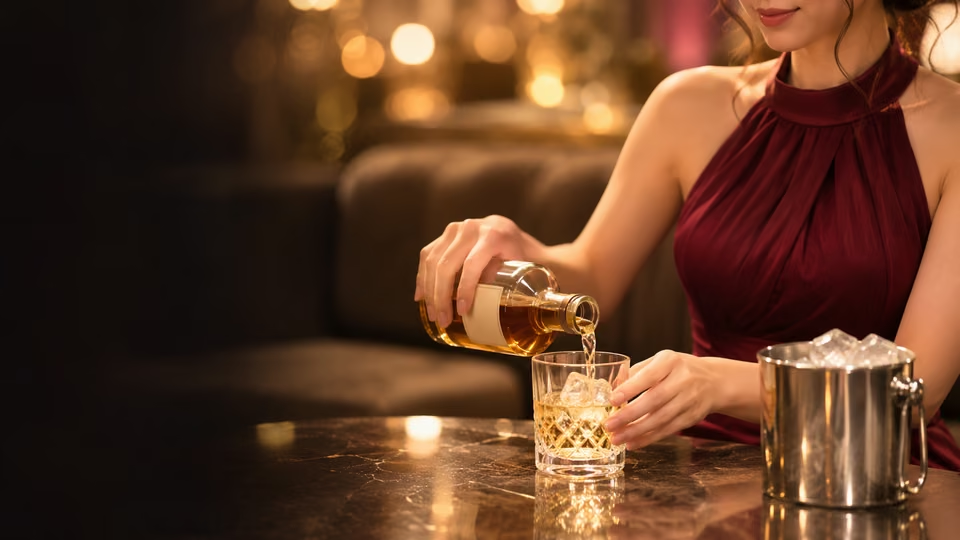
A hostess sits at your table, beside you—not behind a bar, not on a stage. She pours, she talks, she listens, she keeps your glass filled, she lights your cigarette. The relationship is one-to-one or one-to-a-small-group for the duration. This is the element with no real Western equivalent.
The roster and designation (指名)
A kyabakura has a roster of hostesses. On your first visit the house assigns one (or rotates several through your table). If you enjoy a particular hostess, you can designate her—shimei—on future visits for a small fee, and she becomes "your" hostess at that venue. The shimei system is the engine of the industry: it turns one-time customers into regulars and gives hostesses a measurable career.
Legally, kyabakura are regulated under Japan's Fūeihō (風営法, the Entertainment Business Act) as "Type 1" venues—establishments that provide hospitality (sekkyaku) with alcohol. This is the same category as Ginza clubs and lounges. It is a different category from the adult-service industries, which fall under separate sections of the law with separate licensing. The legal distinction is the practical one: kyabakura are licensed to sell company and conversation, and nothing else.
What a Kyabakura Is Not
Most of the confusion in English comes from mapping kyabakura onto Western categories that don't fit. Clearing these up matters, because misunderstanding what you're walking into is how visitors have bad experiences.
It is not a strip club.
There is no nudity, no pole, no dancing. Hostesses are fully dressed—typically in evening dresses—and remain so. Nothing about the format involves display.
It is not a brothel or a front for one.
No sexual services are offered, implied, or available. Physical contact with hostesses is prohibited by the venue and by law; customers who attempt it are removed. The hostesses are not sex workers, and treating them as such is the single fastest way to be ejected and banned.
It is not a dating service.
The hostess's warmth is professional. She may exchange LINE with you, message you, remember your birthday—because that is how she builds the regular clientele her income depends on. The relationship is real in its own terms, but it is a commercial hospitality relationship, and experienced customers understand it as such.
It is not a "hostess bar" in the Western sense.
In English, "hostess bar" often implies a dive where women pressure men to buy overpriced drinks. Legitimate kyabakura are the opposite: the pricing is fixed and disclosed, the hostesses are salaried professionals, and the venues are mainstream businesses with regular corporate clientele. The dive-bar version exists in Japan too—it's what street touts lead you to—which is why you never follow a tout.
It is not a scam by default.
Horror stories about ¥300,000 bills come from bottakuri (ぼったくり, rip-off) venues—unlicensed or rogue operations, almost always entered via a tout. They are the exception, they are illegal, and they are avoided entirely by one habit: enter only venues you've researched or booked, and confirm pricing before you sit.
What Actually Happens: A First Visit in Ten Minutes
Here is a complete, typical first visit, compressed.
You arrive at a building in an entertainment district and take the elevator to the floor listed on the directory. A man in a black suit—the bōi or kuroeri, floor staff—greets you at the door, asks how many, and shows you to a sofa at a low table. You ask for the pricing sheet and confirm: 60-minute set, ¥10,000, includes shochu or whisky highballs, 20% service charge, hostess drinks ¥1,500 each. Fine. You sit.
Within a minute or two, a hostess arrives, kneels briefly, introduces herself by her working name, and sits beside you. She makes your first drink—asks how strong you want it—and hands you a hot towel. She asks where you're from. You use your translation app; she laughs at the output, corrects it, and the conversation is off. She asks about your trip, what you've eaten, whether you've been to Japan before. She keeps your glass topped up without being asked. At some point she'll ask, lightly, if she can have a drink too—you say yes, that's the hostess drink, and it's the convention.
After twenty or thirty minutes, the bōi comes by and the hostess excuses herself—rotation—and a second hostess sits down. Different energy, same warmth. Around the fifty-minute mark, the bōi returns to tell you the set is ending and ask if you'd like to extend. You say no, thank you. He brings the bill: ¥10,000 set, ¥1,500 × 2 hostess drinks, 20% service, tax. Roughly ¥16,000. You pay at the table. The hostess you liked best reappears to see you to the elevator, hands you her card, and—if you've connected—suggests exchanging LINE. The doors close. You've been inside about an hour.
The Kyabakura Family: Related Venue Types
Kyabakura is the mainstream format, but it sits in a family of venues that share the same hospitality tradition at different scales. Knowing the siblings helps you read any Japanese nightlife district.
| Type | Scale | Hostess | Typical cost | Formality |
|---|---|---|---|---|
| Kyabakura (キャバクラ) | Mid-size, many tables | At your table, roster, rotation | ¥5,000–¥20,000 | Medium |
| Club (クラブ) | Small, few tables | At your table, assigned by mama | ¥30,000–¥100,000+ | High |
| Lounge (ラウンジ) | Small to mid | At your table, calmer | ¥5,000–¥14,000 | Medium-high |
| Girls bar (ガールズバー) | Counter only | Behind the bar | Under ¥5,000 / hr | Low |
| Snack (スナック) | Tiny, counter | The mama herself | ¥3,000–¥8,000 | Low, local |
| Host club (ホストクラブ) | Mid-size | Male hosts, female customers | ¥5,000–¥∞ | Medium |
For direct, pair-by-pair comparisons, see hostess club vs girls bar vs snack.
For a visitor, the practical ladder is: girls bar if you want to test the concept cheaply; kyabakura for the real thing; club only once you understand the culture and have the budget. Our girls bar guide covers the first rung (and girls bars by city shows where to find one); Ginza covers the top.
The Vocabulary You'll Hear
- Setto (セット) — Set
- The base package: a time block plus included drinks, at a fixed fee. Always confirm its length and contents first.
- Enchō (延長) — Extension
- Staying past the set, usually in 30-minute increments at an additional fee. Offered near the end; declining is normal.
- Shimei (指名) — Designation
- Requesting a specific hostess. Carries a fee (shimei-ryō, ¥1,000–¥5,000). The core mechanic of the industry.
- Jōnai shimei (場内指名) — In-house designation
- Designating a hostess you met during rotation on the same visit so she stays with you. Smaller fee than a full shimei.
- Dōhan (同伴) — Accompaniment
- Taking a hostess to dinner before her shift and arriving together. A regular's privilege; counts toward her quota.
- Afutā (アフター) — After
- A hostess joining a customer after closing. Unpaid, at her discretion, a mark of regard.
- Nyūkura (ニュークラ / ニュークラブ) — "New club"
- The Hokkaido word for a hostess club. In Sapporo, the word kyabakura (キャバクラ) refers instead to a different, adult-oriented venue type involving physical contact, so in Susukino look for ニュークラブ. See the Susukino guide.
- Kyabajō (キャバ嬢) — Hostess
- A kyabakura hostess. Also simply kyasuto (キャスト, "cast"), the industry's preferred term.
- Bōi / Kuroeri (ボーイ / 黒服) — Floor staff
- Male staff in black suits who seat you, manage rotation, and handle the bill.
- Mama (ママ)
- Proprietress of a club or snack. In a kyabakura, the equivalent role is usually a male tenchō (店長, manager).
- Hosutesu dorinku (ホステスドリンク) — Hostess drink
- Buying your hostess a drink. Convention, not obligation; ¥1,000–¥5,000 depending on tier.
- Botoru kīpu (ボトルキープ) — Bottle keep
- Buying a bottle stored under your name for future visits. The regular's badge.
- Sābisu-ryō (サービス料) — Service charge
- 10–40% added to the bill. Confirm the percentage before sitting.
- Bottakuri (ぼったくり) — Rip-off
- A venue that inflates bills with hidden charges. Avoided by never following touts and always confirming pricing.
- Kyacchi (キャッチ) — Tout
- The street solicitor. The one person in a nightlife district whose advice you never take.
Who Goes, and Why
The stereotype is the lonely salaryman, and he exists. But the actual clientele is broader, and understanding it explains why the industry is as large and as mainstream as it is.
Business entertainment (settai) is the historic backbone: a company takes a client to dinner and then to a kyabakura or club, on expense account, to make the relationship personal. Groups of colleagues after a work drinking party (nomikai) are the volume: a second venue where the conversation continues with a hostess keeping it going. Regulars who've designated a hostess come to see her specifically, the way others go to a favorite bar. Celebrations—a hostess's birthday event, a customer's promotion—fill the top tier. And curious visitors, Japanese and foreign, who want to see the institution for themselves.
What they're buying is consistent: an hour in which someone skilled makes them feel interesting, attended to, and at ease, in a setting designed for exactly that. Japan is a society with elaborate social hierarchies and heavy demands on public self-presentation; the kyabakura is one of the few places where a customer is, for a fixed fee, unambiguously the center of attention and under no obligation to perform back. That is the product, and it's why the industry has outlived every prediction of its decline.
Where to Go: Kyabakura by City
The institution is national; the experience is intensely local. Each of Japan's major hostess districts has its own personality, price band, and cultural inflection. Here is the map—each links to a full NightStyle guide.
Kabukicho
Japan's largest and most intense district. Hundreds of kyabakura at every tier, the most walk-in options, the most touts. The default starting point—and the one that most rewards booking ahead.
¥11,000–¥20,000 at most venues
Kabukicho guide → · Safety guide →Tokyo by Area
Ten districts side by side, including the ones other guides skip: Shinbashi, Akasaka, Shibuya, Ikebukuro, Akihabara, Ueno, and Kinshicho, plus Kawasaki and Yokohama.
¥5,000–¥14,000 in most districts
Tokyo by area →Ginza
The top of the hierarchy. Formal clubs, mama-sans, introductions, suits required, bills that start at ¥50,000. Not a kyabakura district—but the standard every kyabakura measures itself against.
¥30,000–¥100,000+ at clubs
Ginza guide →Roppongi
Tokyo's most foreigner-oriented district. More English-speaking staff than anywhere else, mixed in with bars and clubs of the Western kind. A softer landing for first-timers who want some English.
Kabukicho levels or above
Roppongi guide →Soemoncho & Kitashinchi
Kansai's two halves: Minami's loud, funny, walk-in-friendly Soemoncho and Kita's formal Kitashinchi. Osaka hostesses tease rather than flatter. Many visitors' favorite.
Up to ¥11,000 (Minami)
Osaka guide →Nakasu & Tenjin
Japan's best-value major district and its warmest hostess culture—the Hakata Bijin tradition. A compact river island of clubs with yatai food stalls alongside. The best first kyabakura in Japan.
¥8,000–¥11,000 at most venues
Fukuoka guide →Susukino
The biggest night north of Tokyo. A navigable grid, snow, -10°C streets, warm rooms, easygoing dosanko hostesses, and a 2 AM parfait to finish. Here hostess clubs are called nyūkura ("new clubs"); the word kyabakura means a different kind of venue in Hokkaido.
¥5,000–¥14,000 at most venues
Susukino guide →Nishiki 3-chome
The city everyone skips. Toyota money, the Nagoya-jō aesthetic. Few tourists, and the discovery most visitors never make.
No NightStyle listings yet
Nagoya guide →Browse Venues by City on NightStyle
See real venues with photos, set prices, opening hours, and customer reviews. These are the listings Japanese customers use to choose where to go.
Listings are in Japanese. Your browser's built-in translation (Chrome, Safari, Edge) handles them well.
The Five Rules for a First Kyabakura
Never follow a tout
Every bad kyabakura story begins with a man on the street saying "good club, cheap price." Enter only venues you've researched or booked. This one rule eliminates nearly every risk.
Confirm pricing before you sit
Set fee, time, inclusions, service charge, hostess drink price, extras. Written. Every venue, every time. Legitimate venues expect this question.
No physical contact
Not permitted, not negotiable, not ambiguous. The hostess is a hospitality professional. Treat her like one and the evening works.
Dress smart casual, jacket for the upper tier
Collared shirt, clean trousers, real shoes. Ginza and Kitashinchi want a jacket. Shorts and sandals get you turned away.
Use a translation app, openly
Most hostesses speak only Japanese. The app is not an embarrassment—it's a conversation starter, and hostesses across Japan are used to it. Book ahead if you want to request English-capable staff.
For the full etiquette—what to say, what to avoid, how the shimei system works in detail—read our complete Japan hostess club guide and Japan nightlife etiquette guide.
Frequently Asked Questions
What is a cabaret club in Japan?
A cabaret club is a hostess club: a licensed venue where a hostess sits at your table, pours drinks, and keeps you company for a fixed fee and time. Despite the name, there is no stage show or dancing. "Cabaret club" is the long form of kyabakura (キャバクラ), and the two terms mean the same thing.
What does kyabakura mean?
A contraction of "cabaret club" (キャバレークラブ). A licensed venue where a hostess sits with you, pours drinks, and provides conversation for a fixed fee over a set time. Translated in English as "hostess club." The format emerged in the 1980s between Japan's old cabarets and its formal high-end clubs.
Is a kyabakura a strip club or a brothel?
Neither. No nudity, no dancing, no sexual or physical services—all prohibited by law and by the venues. Kyabakura are licensed under Japan's Fūeihō as hospitality-with-alcohol venues. Attempting physical contact results in ejection.
What happens inside?
You sit, confirm pricing, and a hostess joins you. She pours, talks, listens, keeps your glass full. Some venues rotate hostesses every 20–30 minutes. At the end of your set you extend or pay. The experience is social; the skill is making you feel at ease and interesting.
How much does it cost?
Most kyabakura listed on NightStyle give a budget of ¥5,000–¥11,000; Kabukicho is higher at ¥11,000–¥20,000. A budget guide covers one set (60–90 minutes) plus a minimal hostess drink, tax and service included. A designation fee (shimei), extra drinks, and extensions cost more. Confirm everything before sitting.
Kyabakura vs club vs girls bar vs snack?
Kyabakura: mid-size, table hostess, roster, mainstream. Club: small, formal, mama-san, introduction-based, expensive. Girls bar: counter seating, bartender-style, cheap and casual. Snack: tiny local bar run by a mama with regulars and karaoke. Same tradition, different scale and formality.
Can foreigners go?
Yes, nearly everywhere—particularly in Kabukicho, Roppongi, Osaka's Minami, Fukuoka's Nakasu, and Sapporo's Susukino. Language is the main barrier; a translation app solves most of it. Book ahead, dress smart casual, confirm pricing, never follow a tout.
Which city is best for a first kyabakura?
Fukuoka's Nakasu, for value, warmth, and approachability. Osaka's Soemoncho if you want energy and humor. Kabukicho if you're only in Tokyo—with a reservation. Ginza is for your second or third visit, once you understand the culture.
What is a kyabajō?
A kyabakura hostess (キャバ嬢). The industry prefers "cast" (キャスト). Kyabajō are salaried professionals whose income depends on building a regular clientele through the shimei system; top kyabajō are minor celebrities with their own media presence.
Kyabakura:
Now You Know
A kyabakura is a room where, for a fixed fee and a fixed hour, someone skilled makes you feel like good company. That's the whole thing. It isn't what the word suggests to most English speakers, and it isn't what the touts outside imply. It's a licensed, mainstream, seventy-year-old Japanese institution with its own vocabulary, its own career ladder, and a different personality in every city it operates in.
Pick a city from the map above. Read its guide. Book a venue. Confirm the price. Walk in. An hour later, you'll understand something about Japan that no amount of reading can give you—and you'll have an opinion about which city does it best.
Start with the complete Japan hostess club guide for the full etiquette, or go straight to a city: Kabukicho, Ginza, Osaka, Fukuoka, Sapporo, or Nagoya.