Japan Hostess
Club Guide
What to Expect, What It Costs,
and How to Enjoy It as a Foreigner
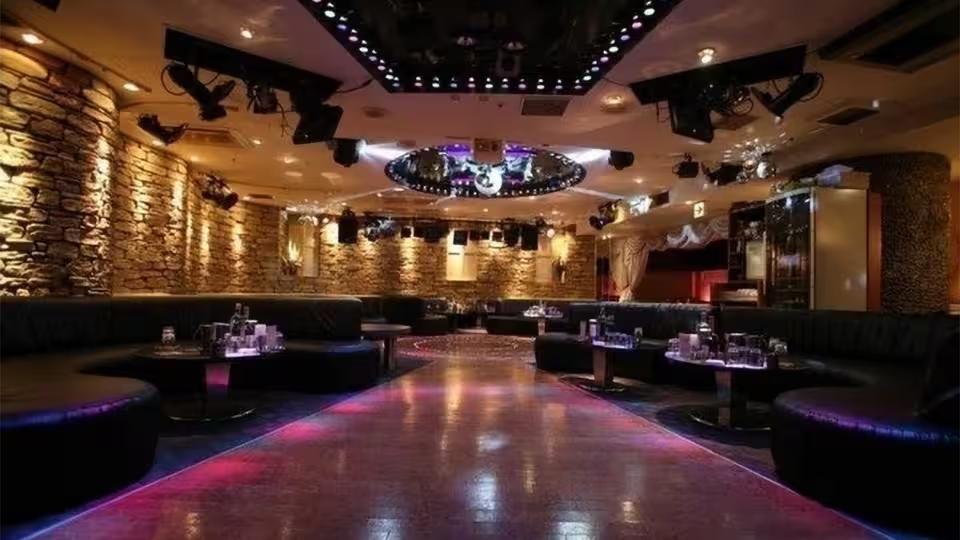
Japan's hostess clubs—known as キャバクラ (kyabakura)—are one of the country's most distinctive nightlife institutions. They exist nowhere else in quite the same form: upscale lounges where attentive female staff pour your drinks, keep conversation flowing, and create an experience built entirely around making you feel welcome.
For visitors from outside Japan, the concept raises questions. What exactly happens inside? How much does it cost? Can foreigners go? What are the rules? Is it what I think it is?
This guide answers all of that plainly—written by Japan's leading nightlife platform, with direct knowledge of the venues and the industry.
What Is a Hostess Club?
A hostess club (キャバクラ / kyabakura, short for "cabaret club") is a licensed nightlife venue where female staff called hostesses (キャバ嬢 / kyabajō) entertain male customers. The entertainment is entirely social: conversation, drink-pouring, light games, and attentive company. There is no physical contact and no sexual service—both are prohibited by law and by the venues themselves.
The experience is best understood as a form of refined hospitality. A skilled hostess makes you feel genuinely interesting, keeps your glass full, and steers conversation with warmth and wit. Regulars return not for the drinks—which are available anywhere—but for the specific hostess they've built a rapport with over time.
Hostess clubs are a legal, mainstream part of Japan's nightlife economy. They exist across the country but are most concentrated in Tokyo's Kabukicho, Ginza, and Roppongi, as well as Osaka's Umeda and Namba districts.
Types of Hostess Venues
01.Kyabakura (キャバクラ)
The most common type. Table seating, a roster of hostesses you can choose from, and a structured set-fee system. Ranges from affordable neighborhood venues to high-end establishments with professional performers. Most of the clubs featured in NightStyle's guides fall into this category.
02.Klub (クラブ)
A more formal and expensive tier. Smaller, more exclusive, with an older and wealthier clientele. Hostesses at this level are typically more experienced, conversation is more sophisticated, and the decor is closer to a private members' club. Often requires an introduction or reservation.
03.Girls Bar (ガールズバー)
A lighter, more casual version. Bar-style seating with female staff serving drinks across a counter. No table service, no set fee in most cases, and a more relaxed atmosphere. Good for first-timers who want a taste of the concept without the full kyabakura commitment. More likely to have English-speaking staff.
04.Show Cabaret (ショーキャバレー)
Combines hostess service with live stage performances—dancers, singers, or theatrical shows performed during your visit. The clubs at the top of Kabukicho's nightlife hierarchy often offer this format. RANMARU in Kabukicho is a prominent example.
How a Visit Works: Step by Step
Arrive and be seated
You're greeted at the entrance, shown to a table, and given the menu or pricing sheet. A hostess is assigned to your table. In some clubs you can request a specific hostess at this point (see shimei-ryō below).
Confirm the set and pricing
Before anything else, confirm exactly what the set fee includes: the time limit (typically 60–90 minutes), what drinks are covered, and whether any additional charges apply. If anything is unclear, ask. This is the most important step to avoid surprises at the end.
The hostess pours and converses
Your hostess pours your first drink, introduces herself, and begins conversation. She may ask about where you're from, what brings you to Japan, your interests. She keeps your glass filled, lights cigarettes if you smoke, and maintains the energy of the interaction. The skill of a good hostess is making this feel effortless and genuine.
Hostess rotation (in some clubs)
Some clubs rotate hostesses at intervals so you meet several during your visit. Others keep the same hostess with you throughout. If you particularly liked a hostess from a rotation, you can request her as your designated hostess (shimei) on your next visit.
Extension or close
When your set time is almost up, staff will ask if you'd like to extend. You can decline and settle the bill, or continue for an additional fee. There's no pressure to extend—it's a standard offer, not an obligation.
Bill and departure
You're presented with the bill itemized by set fee, any extensions, additional drinks, and any shimei fee. Pay at the table or at the register. Staff will see you out, and it's common to exchange LINE (Japan's messaging app) with a hostess you connected with—she may message you with event invitations or personal greetings.
Pricing Explained
| Charge Type | What It Is | Typical Range |
|---|---|---|
| Set Fee (セット料金) | The base charge covering a time block (usually 60–90 min) and a set of drinks or a bottle. This is the main cost of the visit. | ¥5,000–¥15,000 per person |
| Designation Fee (指名料 / shimei-ryō) | An extra charge to request a specific hostess. Optional on a first visit; common on return visits when you have a favorite. | ¥1,000–¥5,000 |
| Bottle (ボトル) | Ordering a bottle of spirits (whisky, champagne, etc.) rather than individual drinks. Bottles can be "kept" at the club for future visits. | ¥10,000–¥50,000+ |
| Extension (延長 / enchō) | Continuing beyond your set time. Charged per additional time block (typically 30 minutes). | ¥3,000–¥8,000 per 30 min |
| Service Charge | Most clubs add 10–20% service charge to the total bill. | 10–20% |
Can Foreigners Go? The Language Question
01.The honest answer
Yes—but with a caveat. The hostess club experience is built around conversation. Most hostesses speak Japanese only. If you speak no Japanese at all, the interaction will be limited. That said, many guests report that a translation app, some basic Japanese phrases, and genuine curiosity create perfectly enjoyable evenings even with a significant language gap.
02.Clubs that welcome foreigners
Some clubs actively market to international guests and have English-speaking hostesses or staff who can assist with communication. Roppongi has a higher concentration of these. In Kabukicho, the clubs listed in our Kabukicho nightlife section cater to a mixed clientele. When booking, simply ask: "Do you have English-speaking staff?" (英語を話せるスタッフはいますか?)
03.Translation tools
Google Translate's camera mode (point your phone at Japanese text to translate instantly) and voice translation are genuine game-changers for this situation. Many hostesses are curious about foreign visitors and will happily converse via a phone screen. The novelty of the interaction can itself become a talking point.
04.Useful Japanese phrases
You don't need to be fluent. A few phrases go a long way:
よろしくお願いします (Yoroshiku onegaishimasu) — Nice to meet you / I'm in your care
どこ出身ですか? (Doko shusshin desu ka?) — Where are you from?
日本語が少しだけ話せます (Nihongo ga sukoshi dake hanasemasu) — I speak a little Japanese
おいしい (Oishii) — Delicious (for drinks/snacks)
楽しいです (Tanoshii desu) — This is fun
Rules & Etiquette
01.No physical contact
This is the fundamental rule. Touching hostesses—including hugging, putting your arm around them, or any unwanted physical contact—is not permitted and will result in being asked to leave. The hostess's job is social, not physical. Respect this absolutely.
02.Let her pour your drinks
Pouring drinks is part of the hostess's role. Let her do it. Pouring your own drink bypasses the service dynamic that defines the experience. When she refills your glass, it's also a cue to reciprocate—offer to pour hers (juice or a soft drink; most hostesses drink lightly on the job).
03.Don't ask personal questions
Asking a hostess for her real name, home address, phone number, or personal social media is inappropriate. The relationship exists within the club. Some hostesses will offer their LINE voluntarily as part of customer relations—that's different from you asking for it. Follow her lead.
04.Dress appropriately
Smart casual minimum. A collared shirt and clean trousers will work at most venues. Higher-end clubs expect a jacket. Shorts, athletic wear, or overly casual dress may get you turned away. When in doubt, overdress slightly—it won't be held against you.
05.Confirm before extending
When your time is almost up, staff will offer an extension. Know the cost before agreeing. Extensions add up, and it's easy to lose track after a few drinks. It's completely normal and fine to say no and close the evening at the original time.
06.Settle your bill honestly
If you agreed to a set fee and extension, pay what you owe. Disputes over bills are a source of serious trouble in Japan's entertainment districts. If you believe you've been charged for something you didn't receive, raise it calmly and ask for an itemized receipt—don't simply refuse to pay.
Scams to Avoid
01.The street tout trap
The most common scam in Kabukicho: a person approaches you on the street, offers free drinks or a special deal, and leads you to an unmarked venue where the bill far exceeds what was implied. Never enter a hostess club after being approached on the street. Always research and book a specific venue in advance or walk in independently after checking the price board at the entrance.
03.Hidden charges
Legitimate clubs display their pricing clearly. Scam venues obscure the set fee, describe services in vague terms, and add charges for items you didn't realize were paid (snacks, specific drink types, "service" categories). The defense: always ask for and read the full pricing sheet before sitting, and ask explicitly: "Is there anything else I'll be charged for?"
03.Hostess drink pressure
In some venues, hostesses are incentivized to order expensive drinks for themselves on your tab. While buying a hostess a drink is a normal and accepted part of the experience, a legitimate venue will tell you the cost before it's ordered. If drinks for staff are being added to your bill without your explicit consent, raise it immediately.
04.Unauthorized bottle keeps
Bottle-keep (leaving an unfinished bottle for your next visit) is a standard and legitimate service. The scam version: you're told a bottle was "opened in your name" without your knowledge and charged for it. Reputable clubs will never open a bottle without your explicit authorization. If this happens, contest it in writing and ask for documentation.
Where to Go: Recommended Venues by District
01.Kabukicho, Shinjuku
The largest concentration of hostess clubs in Japan. Ranges from entry-level venues to some of the country's most elaborate establishments. Best for first-timers who want variety and a lively atmosphere. See the nightlife section of our Kabukicho guide for specific club recommendations including RANMARU, KINGDOM QUEEN, and others.
02.Roppongi
Historically the most foreigner-friendly nightlife district in Tokyo. Several clubs here have English-speaking staff and experience with international guests. The overall atmosphere is more cosmopolitan than Kabukicho. See our Omotesando & Roppongi guide for the area overview.
03.Ginza
Tokyo's most upscale hostess club district. The venues here are formal, expensive, and often require an introduction or reservation. This is the "klub" tier—an older, wealthier clientele, more sophisticated conversation, and significantly higher price points. Not recommended for a first hostess club visit. See the Ginza guide for context.
04.Osaka (Umeda / Namba)
Osaka's hostess club scene has its own distinct character—generally considered warmer and more humorous than Tokyo, reflecting the city's broader personality. Umeda has the highest concentration of clubs. See our Osaka guide for nightlife recommendations including TOWER and CHAUSSURE ANNEX.
Hostess Club Guide — FAQ
Can foreigners go to hostess clubs in Japan?
Yes. The main practical barrier is language—most hostesses speak Japanese only. A translation app helps considerably. Some clubs in Roppongi and parts of Kabukicho have English-speaking staff or actively welcome international guests. Confirm this when booking by asking: "英語を話せるスタッフはいますか?" (Do you have English-speaking staff?)
How much does a hostess club cost in Japan?
A standard first visit typically costs ¥15,000–¥25,000. This usually covers a set fee (time block + drinks), with optional extras like a designation fee, additional drinks, or extensions. Higher-end clubs in Ginza run ¥30,000–¥50,000+. Always confirm the full pricing structure before sitting down.
What is the difference between a hostess club and a hostess bar?
A hostess club (kyabakura) is typically larger with table seating, a formal set-fee system, and a roster of hostesses. A hostess bar is smaller and more casual. The service concept is the same—conversation and drinks—but the scale and formality differ. Girls bars are an even more casual version with counter seating.
Is physical contact allowed in hostess clubs?
No. Physical contact with hostesses is not permitted and will result in being asked to leave. Hostess clubs are legally classified as drinking establishments. The service is entirely social—conversation, drink-pouring, and companionship.
What should I wear to a hostess club in Japan?
Smart casual to business casual. Collared shirt, clean trousers, and leather shoes or clean sneakers at minimum. Higher-end clubs expect a jacket. Shorts, flip-flops, and athletic wear may result in being turned away.
Do I need to book in advance?
Walk-ins are possible at most mid-range clubs, especially in Kabukicho. Higher-end venues—particularly in Ginza—may require a reservation or introduction. Booking in advance for any venue is recommended, as it lets you confirm pricing, request English-speaking staff if needed, and ensures you're entering a legitimate establishment.
What is shimei (指名)?
Shimei means "designation"—requesting a specific hostess for your table. First-time visitors are usually assigned a hostess by the club. On subsequent visits, if you enjoyed a particular hostess's company, you can request her by name for an additional shimei-ryō (designation fee) of ¥1,000–¥5,000. Building this kind of regular relationship is how the industry's deeper customer dynamics work.
How do I avoid being overcharged?
Confirm all charges before sitting: set fee, what's included, designation fee, and cost of additional drinks. Ask for an itemized bill at the end. Only visit venues you've researched—never enter after being approached by a street tout. Reputable venues are transparent about pricing.
A Nightlife Experience
Unlike Anything Else
Japan's hostess clubs occupy a unique cultural space—part bar, part performance, part social ritual. For visitors who approach the experience with curiosity and respect for the rules, it offers a window into a side of Japanese nightlife that most tourists never see.
The key is preparation: know what you're paying, know the etiquette, choose a reputable venue, and arrive with realistic expectations. Done right, a night at a kyabakura is genuinely memorable—and will likely make complete sense only once you're sitting at the table.
Ready to go? Start with our Kabukicho nightlife guide for specific venue recommendations, or read our Kabukicho safety guide if you're visiting the district for the first time.