Is Kabukicho
Safe?
The Short Answer:
Yes — With One Thing to Know
Kabukicho has a reputation that travels further than the facts. The neon, the hostess clubs, the late-night crowds—it all reads as dangerous before you arrive. The reality is more straightforward: Kabukicho is safe to walk through, safe to explore, and visited by millions of tourists every year without incident.
There is one real risk, and it's specific: street touts who approach you offering "free drinks" or "cheap bars" and lead you into unmarked venues with inflated prices. This isn't unique to Kabukicho—it exists in entertainment districts worldwide—and it's entirely avoidable once you know what to look for.
This guide breaks down exactly what's safe, what requires awareness, and how to have a great night in Kabukicho without any problems.
Safety at a Glance
Walking the main streets — Kabukicho's main roads are busy and well-lit 24 hours a day. You can walk freely at any hour.
Golden Gai — The famous bar alley is very safe. Busy, well-populated, no touts. Just walk in and choose a bar.
Restaurants, karaoke, convenience stores — All standard commercial venues operate normally and are completely safe.
Tokyu Kabukicho Tower area — The new complex and its surroundings are busy and tourist-friendly at all hours.
Street touts approaching you — If a stranger approaches offering free drinks or to show you a bar, decline and walk on. This is the main scam vector.
Unmarked venues / no visible pricing — Always check the price board outside before entering any bar or club you didn't research in advance.
Following strangers off the main street — Never let someone lead you into a narrow side alley or an unmarked building based on a street offer. This is how price scams begin.
Why Kabukicho Looks Dangerous (And Why It Isn't)
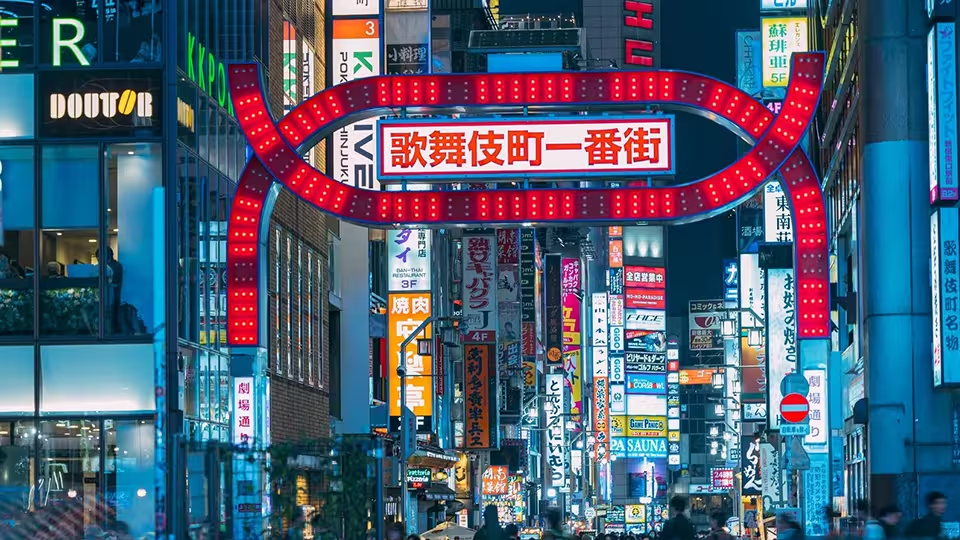
01.The Neon and the Signage
The density of flashing signs, adult entertainment ads, and hostess club facades creates an atmosphere that reads as intense. But signage isn't danger—it's commerce. These venues operate legally under Japan's adult entertainment laws. The streets in front of them are public, busy, and completely safe to walk.
02.Host and Hostess Club Scouts
Young men and women standing outside clubs and calling to passersby are common in Kabukicho. These are staff trying to attract customers—not a threat. You can walk past them, say "daijoubu" (no thanks), and continue. They are not aggressive and will not follow you.
03.Late-Night Crowds
Kabukicho at 2 AM looks chaotic—groups of people, music from open doors, clusters outside clubs. This is just nightlife. The crowd itself is not dangerous. In fact, a busy, populated street is safer than a quiet one. Incidents in Kabukicho are rare precisely because there are always people around.
04.The "Red-Light District" Label
Kabukicho is often called Tokyo's red-light district. Historically accurate—but the label overstates today's reality. The area has been significantly cleaned up over the past two decades. Street crime is low, police presence is consistent, and the overwhelming majority of businesses are standard restaurants, bars, karaoke, and entertainment venues.
The Actual Risk: The Street Tout Scam
How it works
A friendly person approaches you on the street—often in English—and says something like "free drinks tonight," "best bar, very cheap," or "special offer for foreigners." They walk you to a nearby venue. Once inside, you're seated, drinks arrive, and at the end of the night you receive a bill far higher than implied: ¥20,000, ¥50,000, or more. The venue's pricing was technically visible but obscured or misrepresented. This is the single most common negative experience tourists have in Kabukicho.
How to avoid itRule 1: Don't follow strangers
The scam requires you to follow someone. Simply don't. No legitimate bar in Kabukicho needs to recruit customers off the street with free drink offers. If you're interested in a bar or club, find it yourself—research it online or walk in independently after checking the price board outside.
How to avoid itRule 2: Check prices before sitting
Every reputable venue in Kabukicho—and in Japan generally—displays its pricing at the entrance. Look for the table charge (チャージ), set fee (セット料金), and drink prices before you sit. If there's no visible pricing and the staff can't give you a clear number when you ask, leave.
How to avoid itRule 3: Research the venue
The venues listed in our Kabukicho guide are established, reputable businesses. Booking or researching a specific venue before you go eliminates the decision-making that makes tourists vulnerable to touts. You arrive with a destination in mind, walk past the touts, and enter a place you already know is legitimate.
If it happensWhat to do
If you find yourself with an unreasonable bill, stay calm. Ask for an itemized receipt (明細をください / meisai wo kudasai). Refuse to pay for items you didn't order or prices that differ from what was shown. If the situation escalates, ask for a police officer (警察を呼んでください / keisatsu wo yonde kudasai). Kabukicho Police Box (交番) is located near the Kabukicho entrance.
Safety by Traveler Type
01.Solo Female Travelers
Solo female travelers visit Kabukicho regularly and safely. The key rules: stay on main streets, don't follow strangers, and decline invitations into unknown venues. Golden Gai is particularly welcoming—the format of small bars with bartenders and other patrons at the counter is naturally safe for solo visitors. If you feel uncomfortable at any point, the nearest convenience store (open 24 hours) is always a safe place to step inside and regroup.
02.Solo Male Travelers
The street tout scam specifically targets solo male travelers, who are seen as the most likely customers for hostess clubs. The offer of "cheap drinks" or "pretty girls" is the hook. The same rule applies: don't follow. If you want to experience the hostess club scene, research a specific venue in advance, confirm pricing, and enter independently.
03.Couples
Couples are largely left alone by touts, who focus their attention on solo visitors. Kabukicho is perfectly safe for couples at any hour. The sightseeing spots, restaurants, and Golden Gai are all easy to navigate together.
04.Groups
Groups have the safest Kabukicho experience of all—touts rarely approach groups, the atmosphere feels less intimidating, and there's always someone to help navigate. The main adjustment for groups in Golden Gai: bars seat 5–10 people maximum, so large groups should split across different bars rather than trying to pack into one.
Safety by Area Within Kabukicho
01.Kabukicho Main Street & Gate Area
The central artery from the Kabukicho Ichibangai gate onward is the busiest and most tourist-trafficked part of the district. Police boxes are nearby, crowds are constant, and the area is very safe. This is where most sightseeing happens—the gate, the Godzilla head, Don Quijote, and the main restaurant strip.
02.Golden Gai
Very safe. The alleys are narrow but always populated. No touts operate inside Golden Gai. The only thing to navigate is the occasional "regulars only" sign on some bars—this is a house rule about capacity, not a threat. Simply move to the next bar. See the Golden Gai complete guide for details.
03.Side Streets and Back Alleys
The smaller side streets branching off the main road contain many legitimate bars, clubs, and restaurants. They're also where more of the tout activity happens. Walking through is fine—you'll encounter scouts for nearby clubs. Decline politely and continue. Don't follow anyone down a side street you haven't chosen to explore independently.
04.Tokyu Kabukicho Tower Area
The newest part of Kabukicho, built around the 2023 Tokyu Kabukicho Tower. This is the most polished and tourist-friendly zone—cinemas, restaurants, hotels, and family-oriented entertainment. Completely safe at all hours and a good landmark to orient yourself around.
Does the Time of Night Matter?
Kabukicho operates around the clock, and in many ways it's safer late at night than early evening—because there are more people around. The busiest and most energetic hours are 10 PM to 2 AM, when the streets are packed with groups, couples, and solo visitors. This is also when tout activity is highest, but the crowds give you more cover and make it easier to simply walk past.
The 3–5 AM window is when Kabukicho is at its quietest before the morning rush begins. Side streets see fewer people. If you're out this late, stick to the main road and lit areas. First trains start from Shinjuku Station at around 5 AM.
Daytime Kabukicho is entirely ordinary—cafes, shops, office workers, tourists taking photos of the gate and Godzilla head. There's nothing to be cautious about during daylight hours.
10 Practical Safety Tips
01.Don't follow strangers off the main road
The single most important rule. All other risks are minor by comparison.
02.Check prices at the entrance
Before sitting down anywhere, confirm the table charge and drink prices. Reputable venues display this clearly.
03.Research your venues in advance
Use our Kabukicho guide or Golden Gai guide to choose specific venues before you go. Arriving with a destination removes the decision point touts exploit.
04.Keep your group together
If you're with friends, stay together when navigating side streets. Touts almost never approach groups.
05.Stay on lit, busy streets late at night
After 3 AM, the quieter side alleys see less foot traffic. Keep to the main road.
06.Know where the police box is
The Kabukicho Koban (police box) is near the Kabukicho gate. Officers are present and accessible if you need help.
07.Keep your phone charged
Navigation, translation, and communication all depend on it. A portable charger is worth having for a full night out.
08.Bring cash but don't flash it
Many Kabukicho venues are cash-only. Bring enough, but use normal discretion about when and where you handle money.
09.Use convenience stores as safe stops
7-Elevens and FamilyMarts are open 24 hours and are always well-lit and staffed. If you ever feel uncomfortable, step inside one.
10.Trust your instincts
If a situation feels off—a venue, an offer, a person—walk away. Japan's low crime rate doesn't mean zero judgment is required. Your gut is usually right.
Is Kabukicho Safe? — FAQ
Is Kabukicho safe for tourists?
Yes. Kabukicho is safe to walk through and explore. The main streets are busy and well-lit 24 hours a day. The primary risk is not violence or crime on the street—it's entering unknown venues after being approached by street touts. Stick to venues you've chosen yourself and you'll have a safe, memorable night.
Is Kabukicho safe at night?
Yes. Kabukicho is active and busy all night. Unlike entertainment districts that feel empty and risky after midnight, Kabukicho stays busy until dawn. The crowds thin slightly on side streets in the early morning (3–5 AM), but the main streets remain well-populated throughout.
Is Kabukicho safe for solo female travelers?
Yes, with normal precautions. Stay on main streets, decline unsolicited invitations from strangers to enter bars or clubs, and don't follow anyone you don't know into side alleys. Golden Gai is particularly safe and welcoming for solo visitors of any gender.
What are the main scams in Kabukicho?
The main scam is the "free drink" or "cheap bar" offer from street touts. Someone approaches you on the street and leads you to a venue where you're presented with an inflated bill. Always choose your own venues, check prices before sitting, and never follow a stranger off the main street.
Is Golden Gai safe?
Golden Gai is very safe. It's a well-lit cluster of small bars, always busy, with no street tout activity inside the alleys. Walk in, pick a bar that looks welcoming, and enjoy. See the Golden Gai complete guide for more detail.
Is Kabukicho safe during the day?
Completely safe. Kabukicho by day looks like any busy commercial district—cafes, restaurants, shops. The famous gate and Godzilla head are popular daytime sightseeing spots. There is nothing to be cautious about during daylight hours.
Is Kabukicho dangerous compared to other Tokyo neighborhoods?
No. Tokyo is one of the safest major cities in the world, and Kabukicho reflects that. Crime rates are extremely low. The reputation is based on the visual intensity of the nightlife, not on actual danger statistics. Compared to equivalent entertainment districts in other countries, Kabukicho is remarkably safe.
The Bottom Line
Kabukicho is safe. The neon, the hostess clubs, the late-night crowds—none of these are threats. The one real risk is specific and avoidable: don't follow strangers who approach you on the street, check prices before sitting down, and choose your venues in advance.
Do those three things, and Kabukicho is one of the most exciting and memorable neighborhoods you'll encounter anywhere in the world. Explore it with curiosity, not anxiety.
Ready to plan your night? Start with our full Kabukicho guide or dive straight into Golden Gai.