Japan Nightlife
Etiquette
The Unwritten Rules
That Make a Great Night.
Japan has a deeply developed culture around drinking and nightlife — not just rules, but rituals that reflect a broader philosophy about hospitality, group harmony, and the art of having a good time. Most of it is intuitive once you understand the logic behind it.
The good news: Japanese people are genuinely forgiving of foreigners who don't know the customs. Making a small etiquette mistake won't ruin your evening. But knowing the customs means you'll have a more relaxed experience, make better connections, and understand what's happening around you.
This guide covers the essential etiquette for Japanese nightlife — from the first kanpai to settling the bill.
Core Drinking Customs
Wait for kanpai before drinking
When you receive your drink at an izakaya or group setting, wait until everyone has a drink, raise your glass, say "kanpai!" (乾杯), make eye contact, and drink together. Starting before the group kanpai is considered impolite — like sitting down to eat before the host does. Even in casual settings, this brief moment of synchrony matters.
Pour for others, not yourself
When sharing bottles of beer, sake, or shochu at an izakaya, pour into others' glasses and let them do the same for you. Watching your companions' glasses and refilling proactively is a sign of attentiveness and care. Pouring your own glass — especially if others' are empty — is considered self-serving. This applies in group settings with shared bottles; bar staff pouring individual drinks follows different rules.
You can decline without offense
If you don't want to drink more or have health reasons, a gentle "daijōbu desu" (大丈夫です — "I'm fine, thank you") with a slight wave of the hand is understood. There is social pressure to drink in Japan, but it's softer than in many cultures. If you prefer not to drink alcohol, "nomemasen" (飲めません — "I can't drink") is a widely accepted way to decline without explanation. Non-alcoholic options are always available.
The glass height signal
When clinking glasses during kanpai, the height of your glass relative to others is a social signal. Holding your glass lower than someone older or senior to you shows respect. Among peers, equal height is natural. Holding your glass notably higher than a senior person is considered rude. This is most relevant in business or formal drinking contexts — casual tourist situations are less strict.
No tipping
Do not tip in Japan. Not at bars, not at restaurants, not at izakayas, not at hostess clubs. Service quality is considered part of the price you pay; tipping can actually cause embarrassment or confusion. You pay exactly what's on the bill. The one regular charge that surprises people is the otoshi (お通し) — a small automatic dish served when you sit down at an izakaya that carries a charge (¥300–¥700). It's normal and not a mistake.
Izakaya Etiquette
✓ Do
Wait for kanpai before drinkingPour for others when sharing bottles
Say "itadakimasu" before eating
Say "gochisōsama" when you're done
Order gradually through the evening
Accept the otoshi (automatic dish)
Keep chopsticks horizontal when not using them
Wave for service rather than calling out loudly
✗ Don't
Start drinking before the group kanpaiPour your own drink when sharing bottles
Stick chopsticks vertically in rice
Pass food chopstick-to-chopstick
Rush — izakaya dining is meant to be slow
Leave a large amount of food uneaten
Speak very loudly (normal izakaya volume is lively but not shouting)
Assume the otoshi charge is a mistake
Bar Etiquette
01.Sitting at the counter
Many of Japan's best bars are counter-only — small spaces where the bartender faces you across the bar. This format encourages conversation, and bartenders are often deeply knowledgeable about their menu. Engage with them; they appreciate questions about the whisky selection, the house cocktail, or what they'd recommend. It's considered polite to acknowledge the bartender, not to stare at your phone the entire visit.
02.Ordering pace
Japanese bars — especially serious cocktail bars — move at a considered pace. You order one drink, you drink it, you decide on the next. There's no pressure to order quickly or drink fast. This is different from the bar-as-background experience. If you're in a small counter bar, you're expected to be present in the experience, not just consuming it.
03.Small bars and Golden Gai
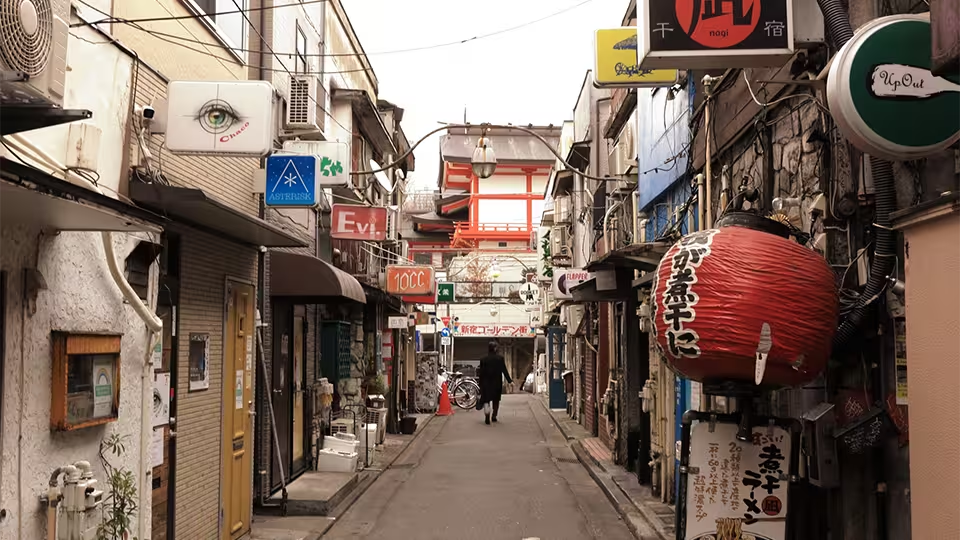
In tiny bars — Golden Gai, Nonbei Yokocho — there are usually just 5–10 seats. These spaces work because everyone present creates the atmosphere together. Keep your voice at a volume that doesn't overpower the room. If the bar has house rules posted (some have unusual ones), follow them. If the owner seems to prefer Japanese conversation, try a few words of Japanese even if imperfect — it's appreciated far more than speaking louder in English.
04.Calling for service
At izakayas and casual bars, many venues have a call button on the table. Press it to summon staff. If there's no button, a gentle raised hand or eye contact with staff followed by "sumimasen" (すみません — "excuse me") is the right approach. Snapping fingers, clicking, or calling "hey!" is considered very rude.
Dress Code by Venue Type
| Venue Type | Dress Code | Notes |
|---|---|---|
| Izakaya | No code | Anything from office clothes to casual wear |
| Small bar / Golden Gai | No code | Casual; the venue sets the atmosphere, not your outfit |
| Cocktail bar | Smart casual | Presentable is appreciated; no strict rules |
| Club | Smart casual minimum | No shorts or flip-flops; collared shirt for men at stricter venues |
| Girls bar | Casual to smart casual | Clean and presentable; no strict code |
| Hostess club | Smart casual to formal | Collared shirt required; jacket preferred at Ginza and high-end venues |
| Upscale hotel bar | Smart to business casual | Jacket common; no athletic wear or shorts |
Practical Customs
01.Smoking
Japan still permits smoking indoors at many nightlife venues — common at izakayas, bars, hostess clubs. Some venues are entirely smoking; others have smoking sections or are non-smoking. Look for 禁煙 (kinen / no smoking) and 喫煙可 (kitsuen-ka / smoking permitted) signs. Smoking on the street is generally prohibited in most Tokyo districts — use designated smoking areas.
02.Noise levels
Japan maintains a strong culture of not disturbing others in public. In entertainment districts this means: lively and loud within venues is fine, but shouting in the street, loud conversations on trains, or disruptive behavior outside venues is taken seriously. After leaving a bar at 2 AM, keep it down on the street. This is more etiquette than law, but Japanese residents appreciate it strongly.
03.Karaoke customs
Private karaoke rooms are your group's space. Common customs: nobody is forced to sing, but enthusiastic participation is welcomed. Applaud after songs. It's polite to order regularly — most karaoke venues require drinks with the room booking. The tambourine is always available and its use is encouraged. Don't answer your phone during someone else's song.
04.Photography
In entertainment districts with many people, street photography is generally fine. Inside bars, especially small intimate ones, ask before taking photos. At hostess clubs and girls bars, most venues ask you not to photograph staff. Event venues and live music venues often prohibit photography during performances. When in doubt, look for signs (撮影禁止 / satsuei kinshi = no photography) or ask.
05.Paying the bill
Japanese bars and izakayas typically don't bring the bill automatically — you ask for it when you're ready (okaikei, or just "chekku" is understood). Some venues have you pay when you order each round; others total everything at the end. Splitting the bill is common; the register can usually split it between people. Avoid leaving large tip amounts on the table when you leave — it will cause confusion.
Essential Phrases
| Situation | Japanese | Pronunciation |
|---|---|---|
| Cheers! | 乾杯! | Kanpai! |
| Before eating | いただきます | Itadakimasu |
| After eating / thank you for the meal | ごちそうさまでした | Gochisōsama deshita |
| Excuse me (calling for service) | すみません | Sumimasen |
| The bill please | お会計お願いします | Okaikei onegaishimasu |
| One more please | もう一杯ください | Mō ippai kudasai |
| Delicious! | おいしい! | Oishii! |
| I can't drink alcohol | 飲めません | Nomemasen |
| I'm fine / no thank you | 大丈夫です | Daijōbu desu |
| It was fun / I enjoyed it | 楽しかったです | Tanoshikatta desu |
Japan Nightlife Etiquette FAQ
Do you tip at bars in Japan?
No. Tipping is not customary in Japan and can cause confusion or embarrassment. Pay exactly what's on the bill. The otoshi (お通し) small automatic dish at izakayas is a standard charge — not a tip situation.
What is kanpai and how do you do it?
Kanpai (乾杯) is the Japanese toast before drinking. Wait until everyone has a drink, raise your glass, say "kanpai!", make eye contact, and drink together. Don't drink before the group kanpai. In formal settings, hold your glass slightly lower than a senior person's as a sign of respect.
Is it rude to pour your own drink in Japan?
In group izakaya settings with shared bottles, yes — pour for others and let them pour for you. Pouring your own glass when others are empty is considered self-serving. At bars where staff pour your drink, this custom doesn't apply.
Can you smoke indoors at bars in Japan?
Many venues still allow indoor smoking. Look for 禁煙 (no smoking) signs if this matters to you. Most outdoor areas in entertainment districts are actually no-smoking — use designated areas.
What should you not do at an izakaya?
Don't drink before kanpai. Don't pour your own drink when sharing bottles. Don't stick chopsticks vertically in rice or pass food chopstick-to-chopstick (funeral associations). Don't rush. Don't refuse the otoshi (automatic small dish). Don't snap fingers to call staff — use sumimasen and eye contact.
The Etiquette Is
Part of the Experience
Japan's drinking customs aren't arbitrary rules — they reflect a culture built on hospitality, attentiveness to others, and the idea that a good night out is a shared experience, not just personal consumption.
The kanpai that synchronizes everyone's first drink. Watching for an empty glass across the table. The bartender who treats your questions about the whisky with the same seriousness a chef would treat food questions. These things are related.
Follow the basics, pronounce your kanpai clearly, say oishii when something is good, and you'll find that Japan's nightlife culture opens up considerably. Japanese people appreciate the effort far more than perfection.