Shibuya
Bars Guide
Start at the Crossing.
End Somewhere You Didn't Expect.
Every Tokyo night out passes through Shibuya at some point. Sometimes it's the destination. Sometimes it's the starting point—a beer at Nonbei Yokocho before heading somewhere else. Sometimes you arrive planning to spend an hour and stay until last train.
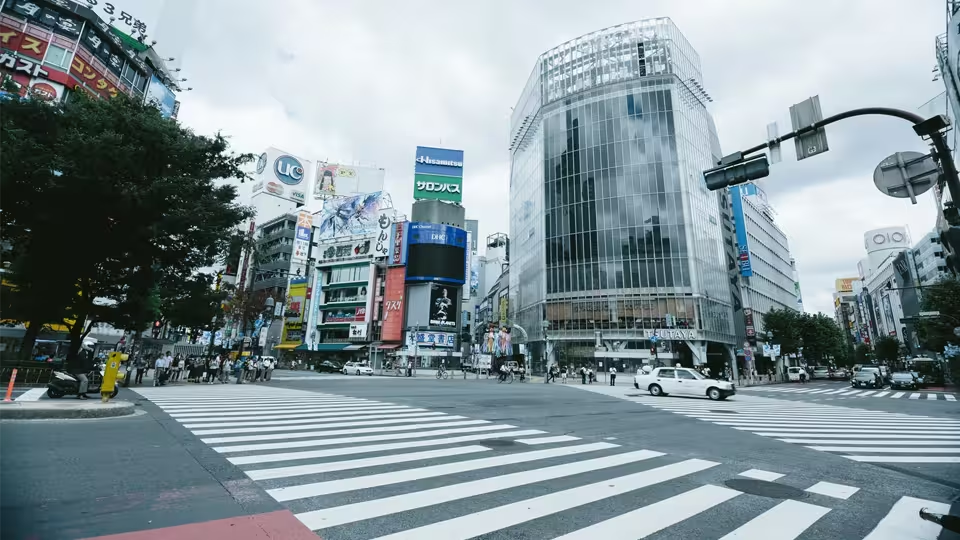
Shibuya's bar scene is diverse in a way that few districts match. The Scramble Crossing surrounded by screens and neon. A 40-bar alley built in the 1940s unchanged. Rooftop cocktails with the whole city spread below. Izakayas packed with office workers on a Friday evening. Clubs that start filling after midnight.
This guide covers where to drink in Shibuya, organized by what kind of night you're having.
Shibuya Drinking at a Glance
| Best for | Wide range — izakayas, alley bars, rooftops, clubs, live music |
|---|---|
| Signature spot | Nonbei Yokocho (Memory Lane) — 40 tiny bars in a 1940s alley |
| Peak hours | Izakayas: 7–10 PM. Bars: 9 PM–midnight. Clubs: midnight–4 AM. |
| Budget range | ¥500 beer at a standing bar → ¥2,000 cocktail on a rooftop |
| Full evening cost | ¥5,000–¥15,000 per person |
| Foreigner-friendly? | Mostly yes — more tourist-oriented than Ikebukuro, less than Roppongi |
| Station | Shibuya Station — multiple exits; west exit for Nonbei Yokocho |
Shibuya's Drinking Zones
01.Nonbei Yokocho
Shibuya's most atmospheric drinking spot. A narrow 100-meter alley of about 40 tiny bars — some with original wooden buildings from the 1940s — running north from Shibuya Station's west exit. The bars seat 5–15 people each and focus on conversation. Most serve beer, whisky, and simple cocktails. Cover charges run ¥300–¥1,000; drinks ¥600–¥1,200. Some are Japanese-only; many welcome foreigners. Arrive before 9 PM to find a seat on busy nights.
02.Dogenzaka & Udagawacho Backstreets
The dense network of streets northwest of the Scramble Crossing — Dogenzaka slope and the Udagawacho area — contains Shibuya's most varied bar scene. Hundreds of izakayas, cocktail bars, clubs, and small music venues are stacked in multi-story buildings and hidden on upper floors. Google Maps or dedicated nightlife apps are helpful for navigating — there are too many venues to survey on foot efficiently. Budget: ¥500–¥1,500 per drink depending on venue type.
03.Rooftop Bars
Several buildings near the Scramble Crossing have rooftop or high-floor bars with excellent views of the intersection and surrounding skyline. Scramble Square and SHIBUYA SKY offer the most dramatic elevated experiences. Prices are higher than street-level (¥1,500–¥2,500 per drink) but the views justify it. Busy on weekends — go earlier in the evening (7–9 PM) to avoid queues.
04.Izakaya Strips
The east side of Shibuya around Hikarie and the streets toward Ebisu have classic izakaya strips — multi-floor restaurant buildings and street-level izakayas packed with office workers from 6 PM onwards. These are the most affordable drinking options: nomihoudai (all-you-can-drink) deals from ¥1,500–¥2,000 for 90 minutes, full food menu, loud and lively. Best for groups.
05.Clubs
Shibuya's club scene is younger and more fashion-forward than Roppongi's. Multiple venues across Dogenzaka ranging from 200-person intimate clubs to larger venues. Music policy varies by night — from J-pop and R&B to electronic and hip-hop. Covers run ¥1,500–¥3,000. Most clubs don't feel right before midnight; plan to arrive late and stay until first trains.
06.Live Music
Shibuya is arguably Tokyo's live music capital — dozens of live houses (ライブハウス) hosting everything from jazz to indie rock to electronic. Venues range from small basement clubs (100 capacity) to mid-size venues. Most shows run 7–10 PM with bar service; after-show hours continue until last train. Check venue websites or local listings for current schedules.
The Scramble Crossing: When and Why
Don't skip the crossing
The Shibuya Scramble Crossing is genuinely worth doing, even knowing it's on every tourist itinerary. At peak hours — 7–9 PM on weekdays, any time on weekends — thousands of people cross from all directions simultaneously when the lights change. Standing in the middle of it at night, surrounded by neon and motion, is one of those Tokyo moments that stays with you. Cross it. Then get a drink and watch it from a window bar or rooftop. Both perspectives are worth having.
What to Order & What Things Cost
01.Nomihoudai (飲み放題)
All-you-can-drink sets are widely available at Shibuya izakayas. Standard deal: ¥1,500–¥2,500 for 90 minutes including beer, highballs, cocktails, and often shochu or sake. Quality varies — budget sets use basic spirits; better izakayas include craft beer or premium Japanese whisky. Ideal for starting the evening before moving to bars. Most useful for groups of 3+.
02.Highball (ハイボール)
The default Japanese drink: whisky and soda, served tall with ice. Almost every venue serves them, typically ¥400–¥800. Suntory Toki or Kakubin whisky is standard; fancier bars use premium single malts. Light, refreshing, and the natural companion to izakaya food. A good test of a venue's bar quality is whether their highball is properly carbonated and ice-cold.
03.Craft Beer
Tokyo's craft beer scene has grown significantly and Shibuya has several dedicated craft beer bars alongside izakayas with rotating taps. Expect ¥700–¥1,200 per pint. Japanese craft breweries — Yo-Ho Brewing, Minoh Beer, Coedo — are worth seeking out. Many venues have a tap list on a chalkboard outside; if you see one with 10+ rotating taps, it's worth stopping in.
04.Japanese Whisky
Shibuya whisky bars range from dedicated single-malt counters to izakayas with a few bottles behind the bar. A glass of good Japanese whisky (Yamazaki, Hakushu, Hibiki) runs ¥1,200–¥3,000 at a bar; supermarket bottles start from ¥3,000 if you want to compare. If you're whisky-curious, a dedicated whisky bar in Shibuya or the backstreets around Nishi-Azabu is one of the better Tokyo drinking experiences.
Getting There & Getting Around
| Station | Shibuya Station (JR Yamanote Line, Ginza Line, Fukutoshin Line, others). Large station — use Hachiko Exit (west) as your orientation landmark. |
|---|---|
| Last trains | JR lines: around midnight–12:30 AM. Tokyu lines: similar. Fukutoshin Line: slightly later. After last train, taxis are available; the next trains start around 5 AM. |
| Getting around Shibuya | Shibuya is walkable — most areas are within 10–15 minutes on foot from the station. The hills and backstreets can be confusing; Google Maps works well here. |
| Cash | Mix of cash and card. Izakayas at major chains accept cards; smaller bars and Nonbei Yokocho venues are often cash-only. Bring ¥10,000–¥15,000. |
| Best nights | Shibuya is lively any night. Friday and Saturday evenings are peak — the crossing is most impressive, clubs are fullest, Nonbei Yokocho fills up earliest. Wednesday and Thursday evenings are busy without weekend crowds. |
Combine With
→Kabukicho, Shinjuku
15 minutes by train. Shibuya for the energy and the Scramble; Shinjuku for Golden Gai and the deeper dive into Tokyo nightlife. A classic two-district evening — start in Shibuya by 7 PM, move to Shinjuku after 10.
→Roppongi
20 minutes by taxi or 15 minutes on the Hibiya Line from Naka-meguro (one stop from Shibuya). Shibuya for the izakaya and bar scene; Roppongi for clubs and late-night drinking. Natural progression for a longer night.
Shibuya Bars FAQ
Where is the best place to drink in Shibuya?
Nonbei Yokocho is the most atmospheric — a 1940s alley of 40 tiny bars near the west exit. For izakayas and variety, the Dogenzaka and Udagawacho backstreets have hundreds of options. For views, the rooftop bars near Scramble Square. It depends on what kind of evening you want.
What is Nonbei Yokocho?
A narrow 100-meter alley of about 40 small bars near Shibuya Station's west exit — some in original wooden buildings from the 1940s. One of Tokyo's most atmospheric bar streets. Cover charges ¥300–¥1,000; drinks ¥600–¥1,200. Many welcome foreigners; some are Japanese-only. Arrive by 8–9 PM for best seat availability.
How much does drinking in Shibuya cost?
Wide range. Izakaya nomihoudai: ¥1,500–¥2,000 for 90 minutes of all-you-can-drink. Regular bar drinks: ¥500–¥1,200 each. Nonbei Yokocho per bar: ¥2,000–¥4,000. Rooftop cocktails: ¥1,500–¥2,500. Club cover: ¥1,500–¥3,000. Full evening: ¥5,000–¥15,000.
Is Shibuya good for nightlife?
Yes — one of Tokyo's best nightlife districts, and more accessible than Kabukicho for first-time visitors. The Scramble Crossing alone is worth the trip, and the backstreet bar scene has something for every preference.
When does Shibuya nightlife start?
Izakayas from 5–6 PM, busy by 7. Bars peak from 9 PM. Clubs from midnight. The Scramble Crossing is spectacular at any hour after dark. Last trains around midnight–1 AM; many venues run until 5 AM.
Shibuya After Dark
Shibuya rewards the decision to stay past the Scramble Crossing photo. The Nonbei Yokocho bar you squeeze into at 9 PM. The izakaya where three beers and a plate of karaage turns into two hours. The rooftop where the city looks like it goes on forever.
Start with the crossing at dusk, when the neon is at its best. Walk northwest into the backstreets. Let the evening develop.
For the full Tokyo picture: Tokyo Nightlife Guide | Shibuya district guide